



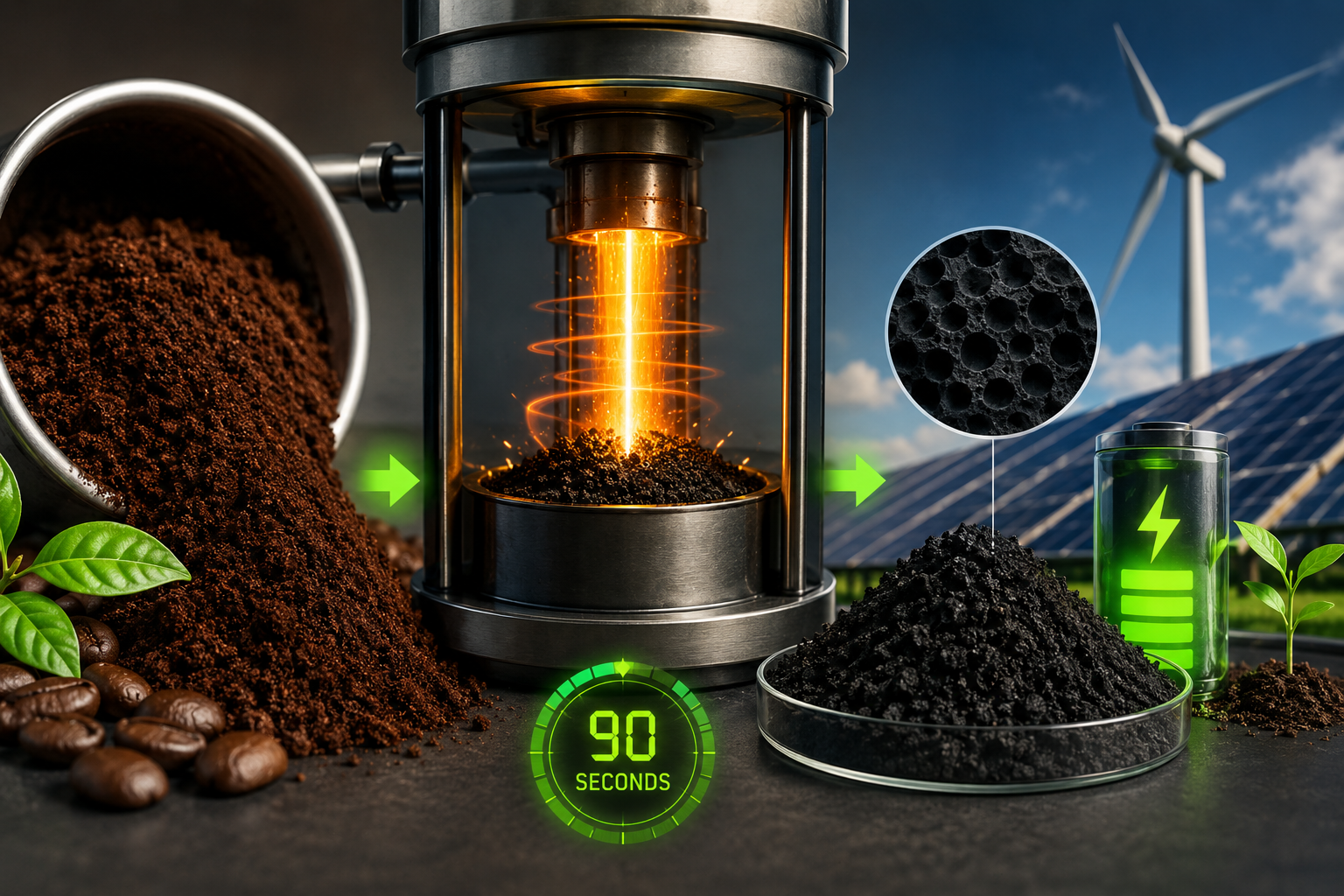
By the time most people finish their morning coffee, they toss the leftover grounds into the trash. Scientists in South Korea believe that routine may soon change.
Researchers at the Korea Institute of Geoscience and Mineral Resources (KIGAM) have developed a rapid method that transforms spent coffee grounds into high-quality biochar in just 90 seconds. The breakthrough could unlock a valuable renewable energy source from one of the world’s most abundant food wastes.
People around the world generate between 8 million and 10 million tonnes of coffee waste every year. Most of it ends up in landfills, despite retaining considerable energy potential. High moisture content has traditionally made recycling and energy recovery both expensive and time-consuming.
The new process changes that equation.
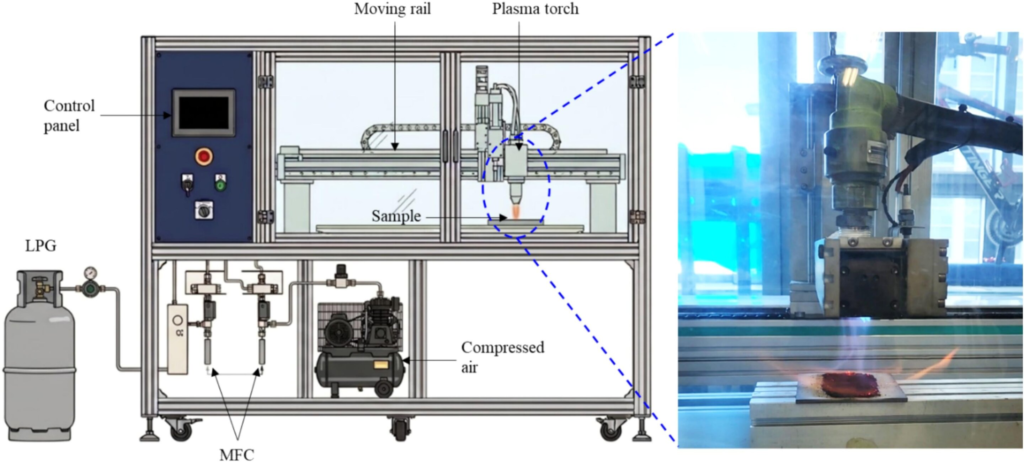
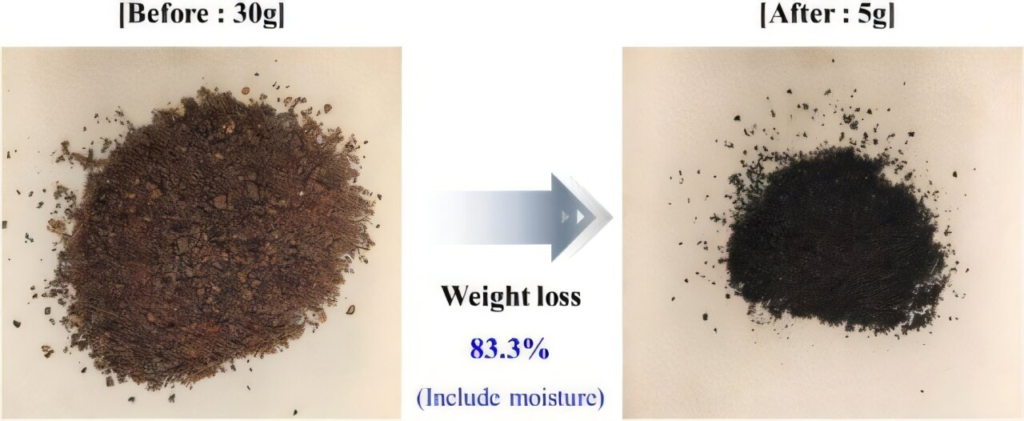
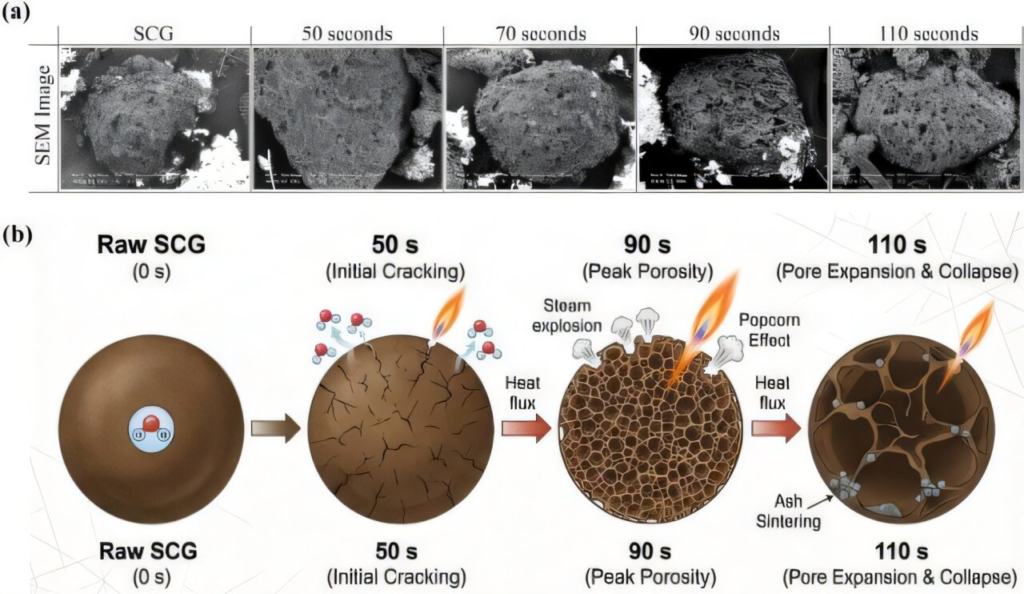
The KIGAM team employs a technique called Flame Plasma Pyrolysis (FPP). Plasma temperatures reach roughly 900°C (1,652°F). Moisture trapped inside the coffee waste rapidly expands, creating microscopic reactions that form porous carbon structures. Biomass volume is reduced by as much as 83.3%, according to the researchers.
The resulting biochar reportedly demonstrates properties comparable to anthracite coal, one of the highest-grade fossil fuels. Yet it originates entirely from organic waste. Smoke and tar emissions during processing are also significantly lower than in conventional thermal methods.
Lead researcher Taejun Park said in an official statement, “This technology presents a new paradigm that treats waste as a valuable energy resource rather than a disposal problem.”
The findings align with broader scientific efforts to convert coffee waste into advanced carbon materials. Earlier studies have shown that activated carbon derived from spent coffee grounds can deliver excellent performance in supercapacitors and energy-storage systems because of its highly porous structure and large surface area.
However, commercialization remains the next challenge. Industrial scaling, economic viability, and integration with municipal waste streams must still be addressed.
Even so, the implications are substantial. A beverage consumed by billions each year may now offer more than caffeine. It could help fuel a cleaner energy future while reducing landfill pressure at the same time. For a world seeking circular economy solutions, yesterday’s coffee waste may become tomorrow’s renewable resource.
Reference- Futurism, South Korea’s National Research Council of Science and Technology, Nature, Chemical Engineering Journal, Springer