



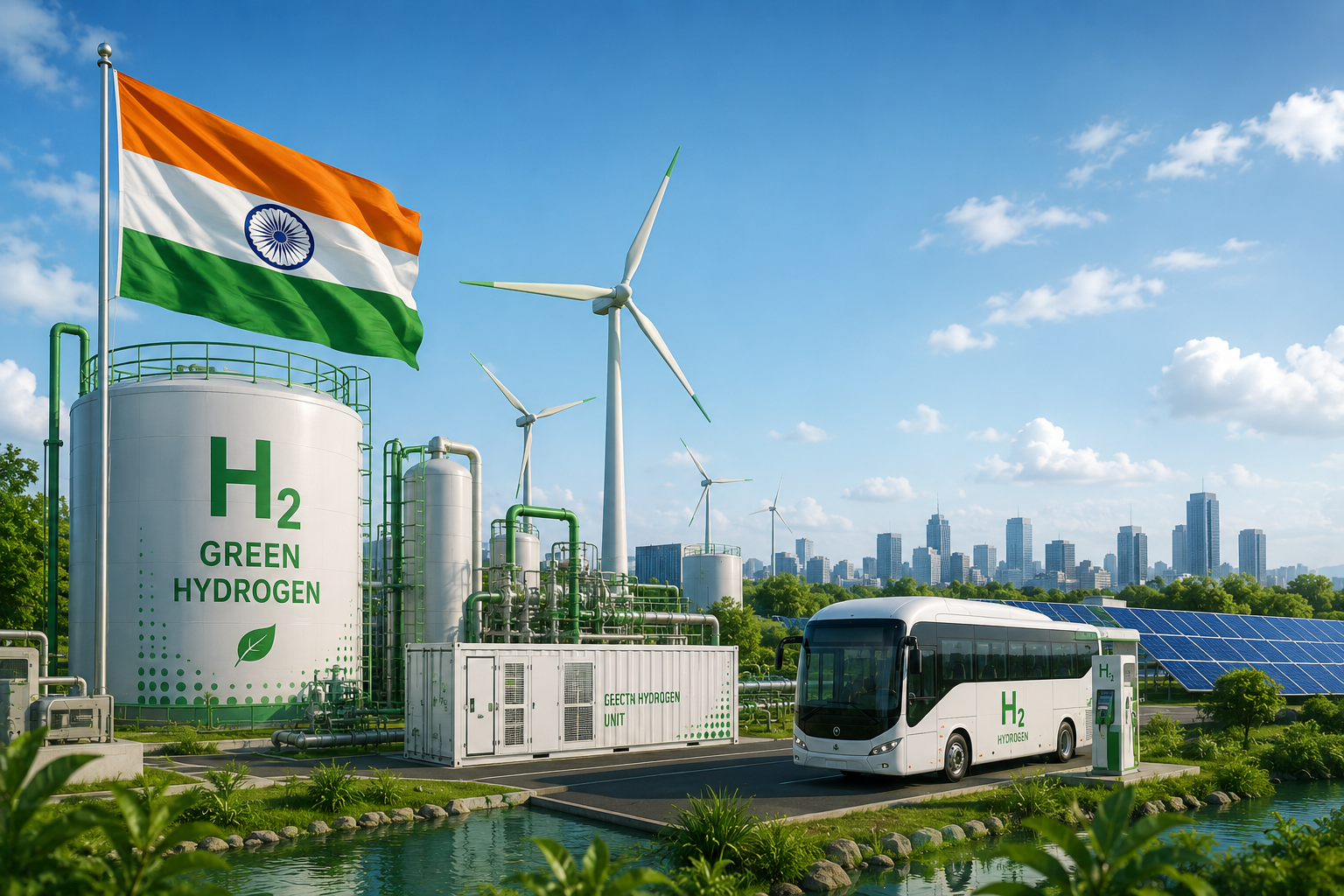
India is quietly making hydrogen energy work — not just on paper, but in the real world. This shift is being driven by the National Green Hydrogen Mission. Launched in 2023, it set an ambitious target. The goal is 5 million metric tonnes of green hydrogen production every year by 2030.
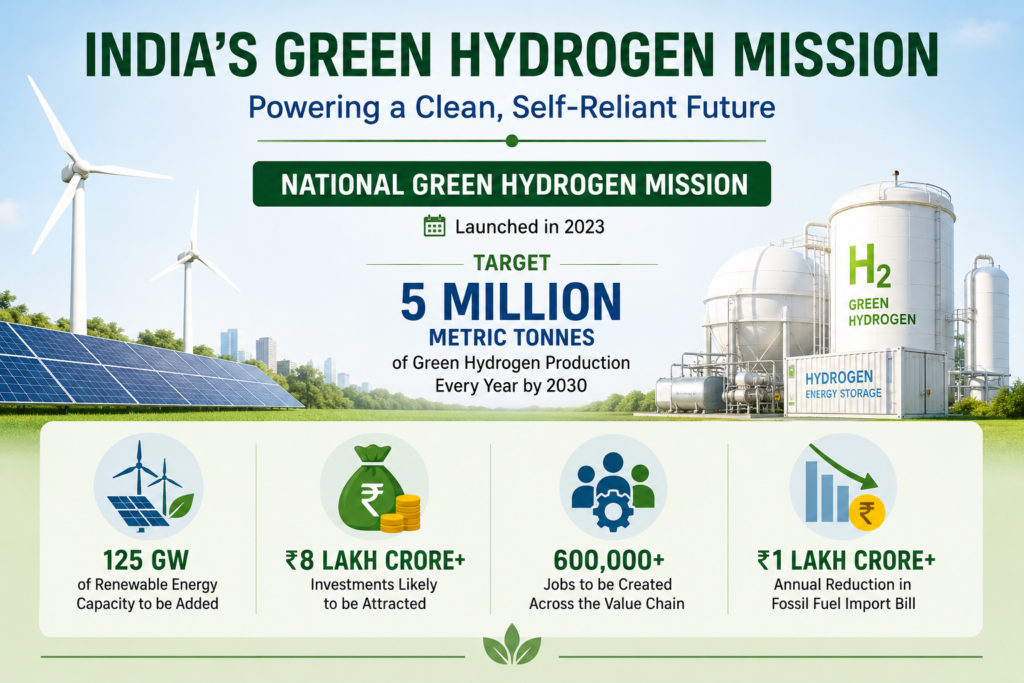
The numbers behind this mission are staggering. India plans to add around 125 GW of renewable energy capacity to support this transition. The sector is likely to attract investments exceeding ₹8 lakh crore. The initiative could create more than 600,000 jobs across the value chain. It could also reduce India’s annual fossil fuel import bill by over ₹1 lakh crore.
So, what exactly is green hydrogen? Renewable energy powers the electrolysis process that produces green hydrogen. Unlike grey hydrogen, green hydrogen generates little to no carbon emissions during production. Industries across India are now using it to replace grey hydrogen in refineries and fertilizer plants, helping reduce their carbon footprint and dependence on fossil fuels.

Real pilots are already proving hydrogen’s potential on the ground. Take Deendayal Port in Kandla, for example. The port commissioned a 1 MW indigenous green hydrogen plant to support its clean energy goals. The facility powers port buses and lighting systems while producing nearly 140 metric tonnes of green hydrogen annually.
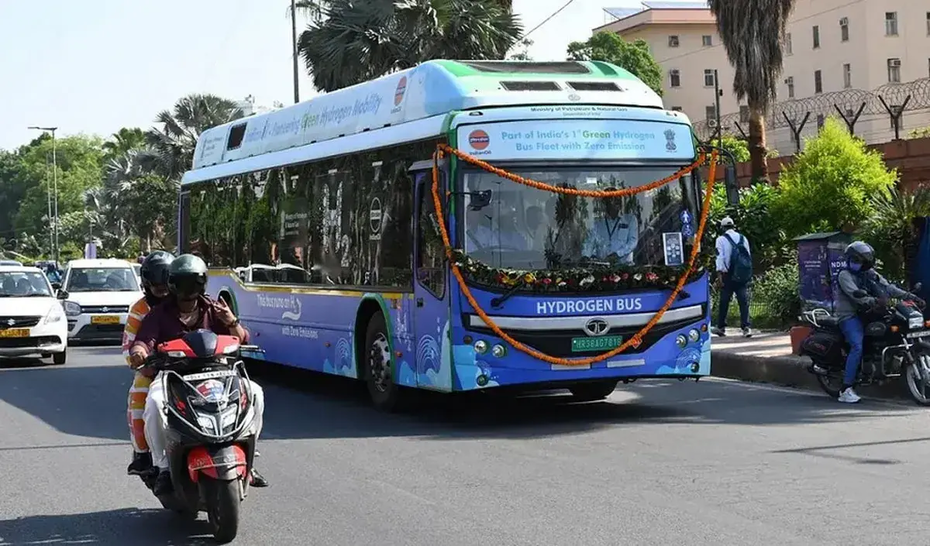
Hydrogen is transforming mobility as well. Tata Motors has deployed hydrogen fuel cell buses in Delhi and Leh. These buses emit only water vapour, making them a zero-emission transport solution. Five buses already operate in Ladakh. Authorities now plan to deploy 37 hydrogen-powered buses and trucks across 10 routes, supported by nine dedicated hydrogen refueling stations.
Heavy industries are leading the early charge. Steel, refineries, and fertilizer plants are switching over first. These sectors are where the biggest early impact is being felt.
Experts are taking note of this momentum. The Ministry of New and Renewable Energy has stated clearly, “Green Hydrogen is the future of the world.” India is not just participating — it aims to become a global hub and exporter. Big players like BPCL, Reliance, Adani, and NTPC are already building hydrogen hubs.
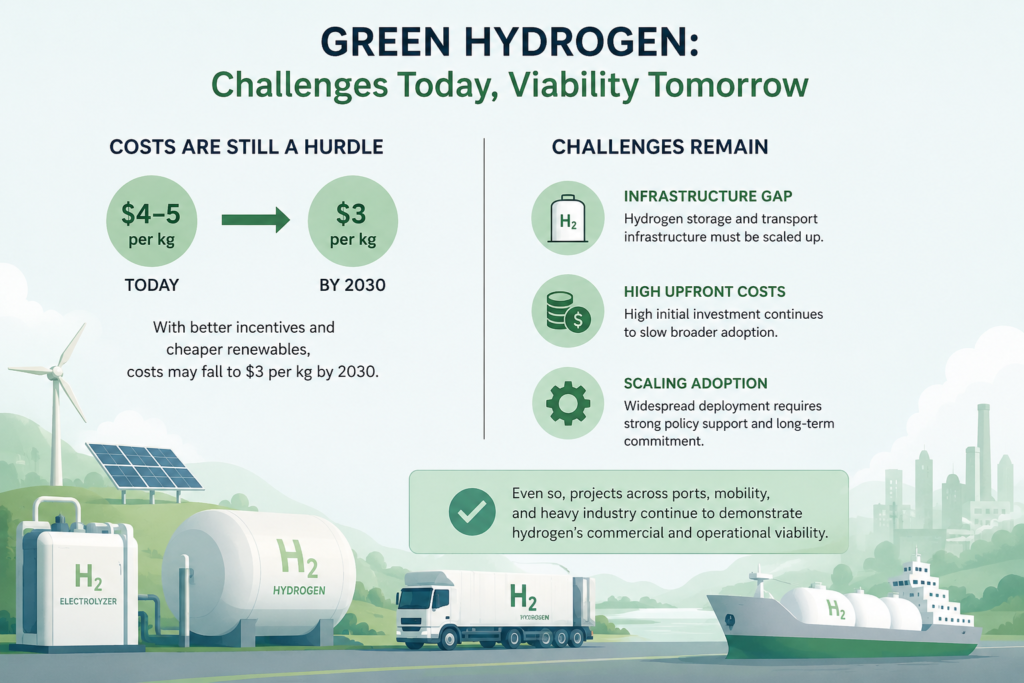
Costs are still a hurdle, though. Green hydrogen sits at around $4–5 per kg today. However, with better incentives and cheaper renewables, that figure may fall to $3 per kg by 2030.
The industry still faces several challenges. Companies and policymakers must scale up hydrogen storage and transport infrastructure. High upfront costs continue to slow broader adoption. Even so, projects across ports, mobility, and heavy industry continue to demonstrate hydrogen’s commercial and operational viability.
India holds a natural advantage in the hydrogen economy. Its abundant solar and wind resources give it a strong competitive edge on the global stage. As a result, the country’s push for green hydrogen directly supports its net-zero emissions target for 2070.
In addition, farmers, industries, and cities stand to benefit from cleaner air, reduced pollution, and stronger energy security. Consequently, India is emerging as a leading force in the Global South’s clean energy transition.
Reference- Reuters, The Economist, IEA, Sustainable Futures Collaborative, Fuel Cell Works