




Artificial intelligence (AI) is quietly giving the fossil fuel industry a powerful boost, according to a peer-reviewed study published in NPJ Climate Action. The research found that AI-driven gains in oil and gas production could create far more emissions than AI helps avoid through renewable energy.
The study was co-authored by Will Alpine and Holly Alpine, former Microsoft sustainability managers. They now lead the nonprofit Enabled Emissions Campaign. Purdue University researcher Maksym Chepeliev and independent analyst Nathan Geldner also contributed to the modeling.
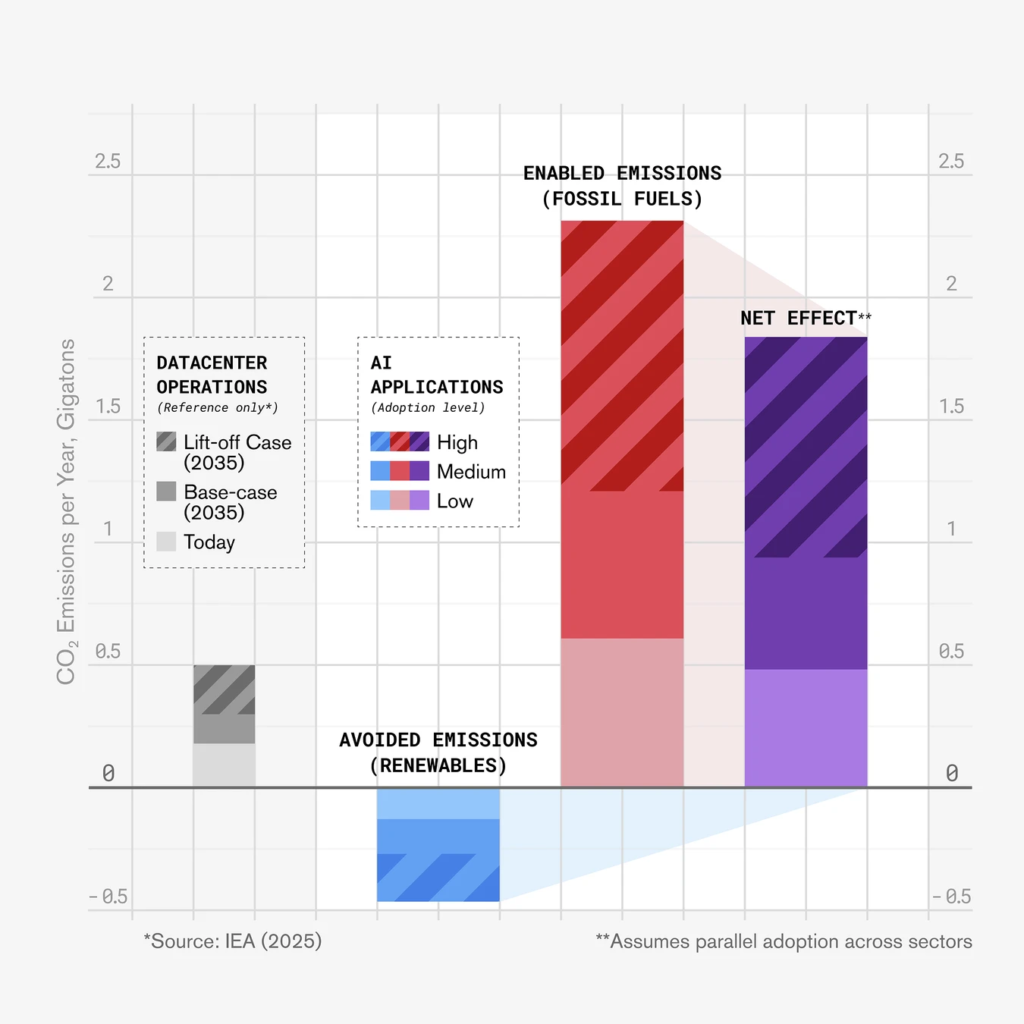
The researchers estimate that global CO₂ emissions could increase by 0.47 to 1.8 gigatonnes each year. That equals roughly 1.2% to 4.8% of global energy-related emissions in 2024. The lower figure is similar to Mexico’s annual emissions. The higher estimate approaches Russia’s output, making it a major climate concern.
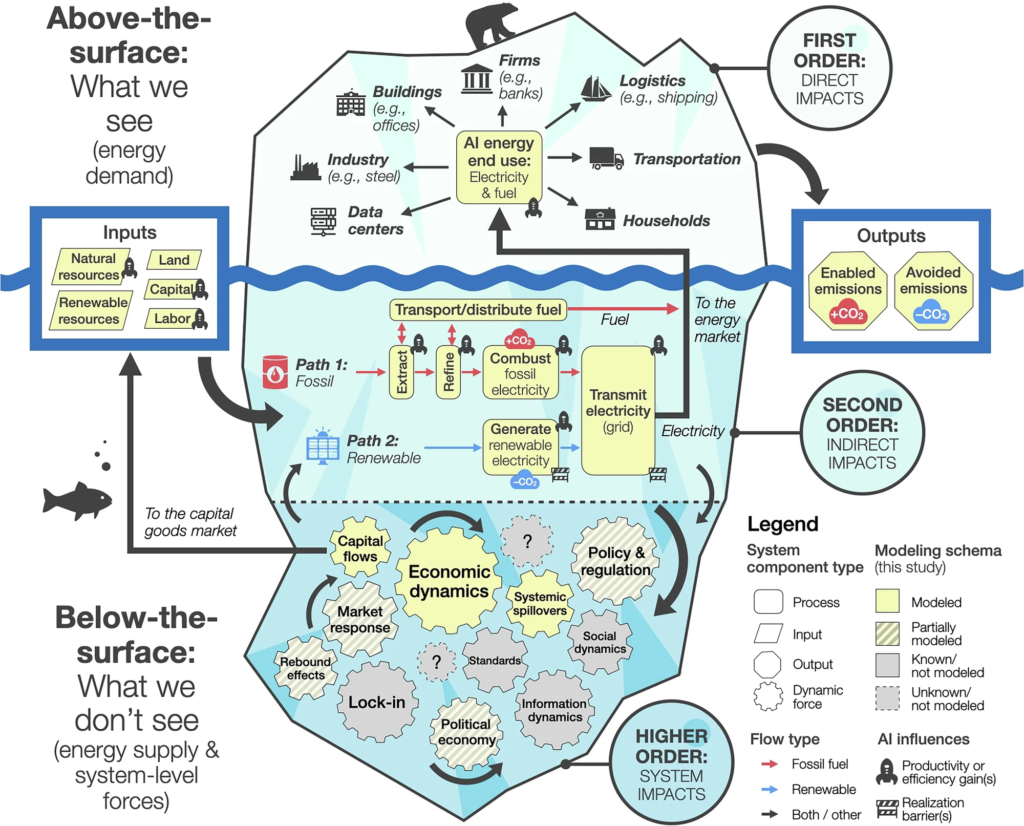
The biggest surprise, however, involves AI data centers. Fossil fuel productivity gains linked to AI could create three to 13 times more emissions than the data centers powering AI, the study found. This challenges the belief that AI’s main environmental problem is electricity-hungry computing infrastructure.
Instead, much of the impact comes from what researchers call “enabled emissions.” AI can help oil and gas companies locate reserves, improve extraction, and refine fuels at lower costs. These efficiency gains can make fossil fuel production faster and more profitable.
The researchers pointed to growing links between technology companies and fossil fuel producers. Microsoft’s long-term gas supply agreement with Chevron and Amazon’s gas-fired power plant in Texas illustrate this relationship.
“Tech companies employ teams of engineers and salespeople who work directly with the fossil fuel industry,” Holly Alpine told HEATED.
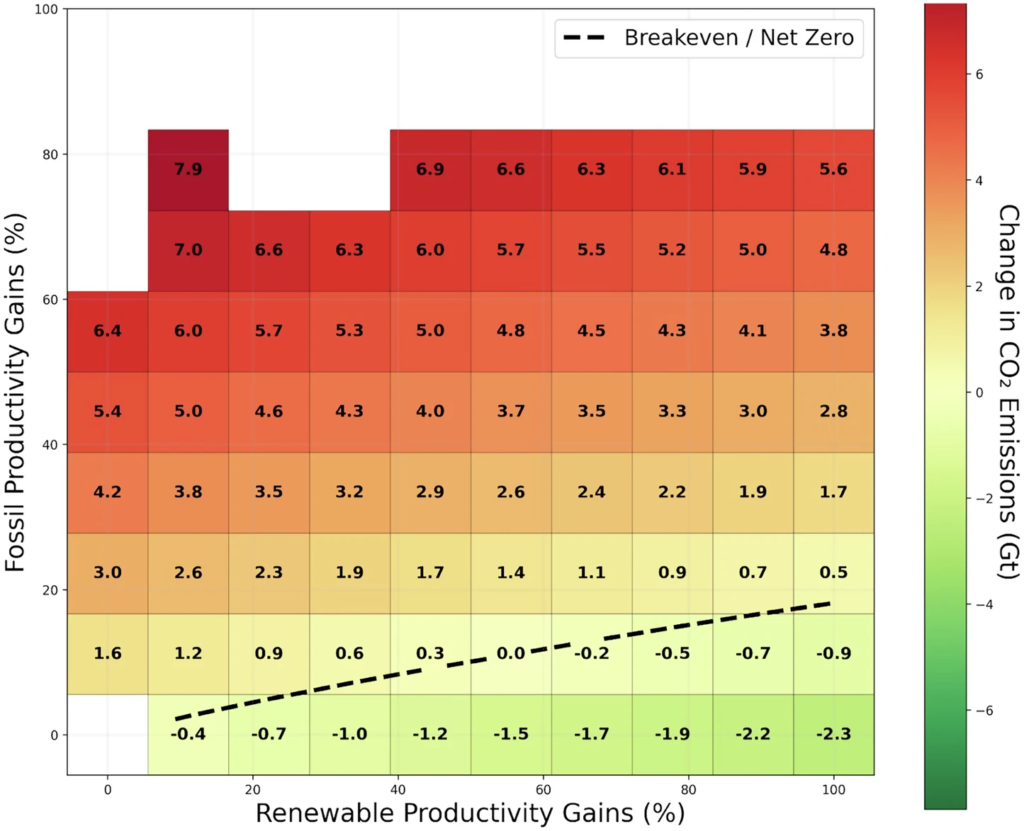
The researchers modeled AI as a two-way productivity amplifier. It can accelerate both clean energy and fossil fuel development. However, fossil fuel gains were much larger across most scenarios they tested.
As a result, global emissions declined only when the model assumed zero productivity gains in the fossil fuel sector.That scenario appears unlikely given current industry trends. Renewable energy would therefore need productivity improvements four to five times greater than fossil fuels just to offset the additional emissions.
The authors are calling for stronger rules governing AI’s use across the energy sector. Without safeguards, they warn that AI could unintentionally accelerate climate change instead of helping solve it.
India should also take note. AI adoption is expanding while the country is pursuing ambitious renewable energy targets. Without appropriate safeguards, rapid AI deployment could strengthen fossil fuel demand and weaken progress toward cleaner energy.
The findings add to growing concerns about AI’s wider environmental footprint. Earlier research has highlighted data-center emissions, air pollution, water use, and growing pressure on electricity grids. The message is clear: AI is not automatically a climate solution. Its environmental impact will depend on where and how the technology is deployed.
Reference- Futurism, NPJ Climate Action study, IEA data, and recent research on AI’s water and carbon footprint