



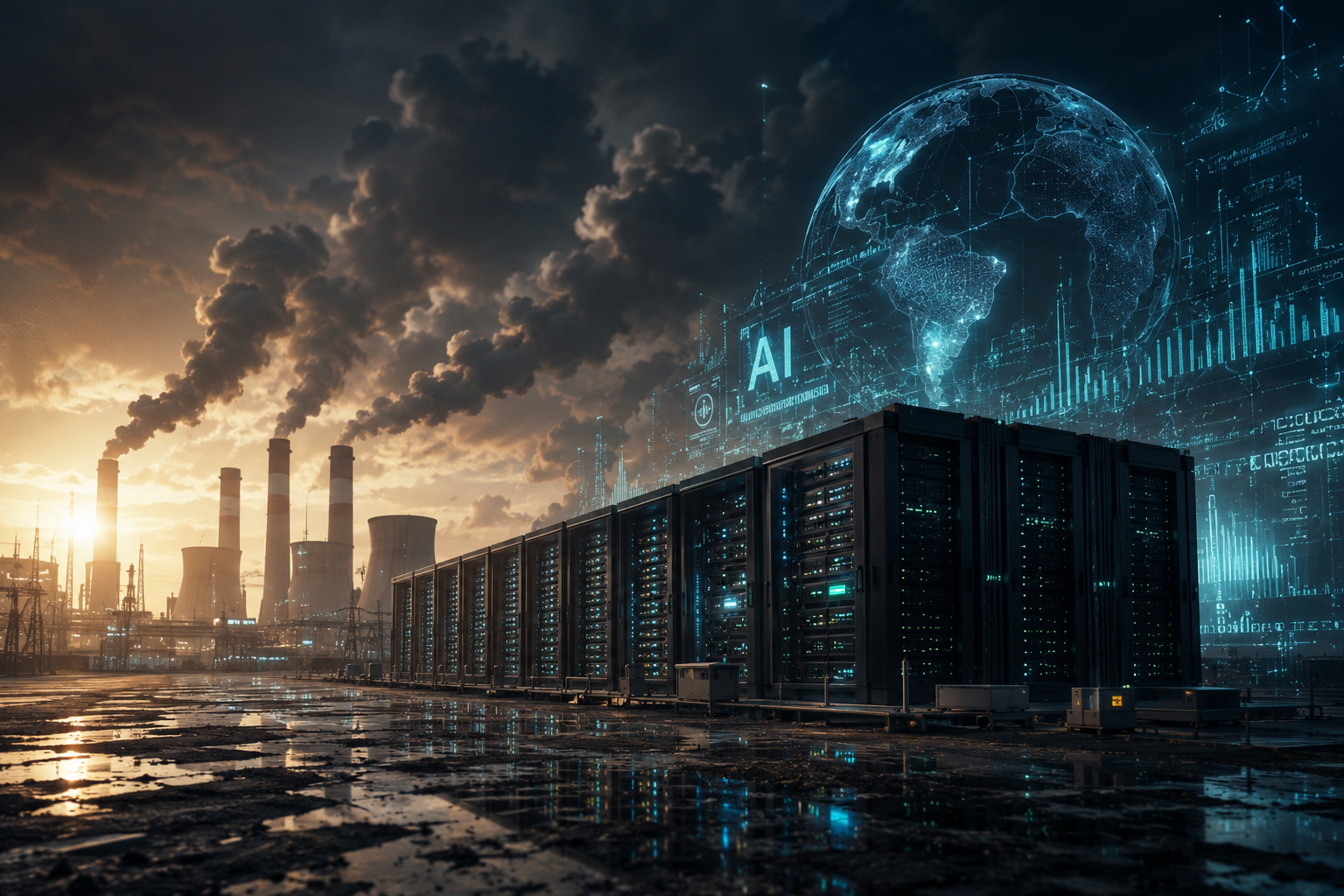
Big Tech pours billions into AI. Meanwhile, data centers continue to surge in size and number. Yet the full climate cost remains largely hidden from public view.
MIT Technology Review examined the numbers. At first glance, a single AI query uses little power. However, billions of daily interactions add up quickly. Today, inference drives 80-90% of AI computing demands. As a result, energy consumption continues to climb.
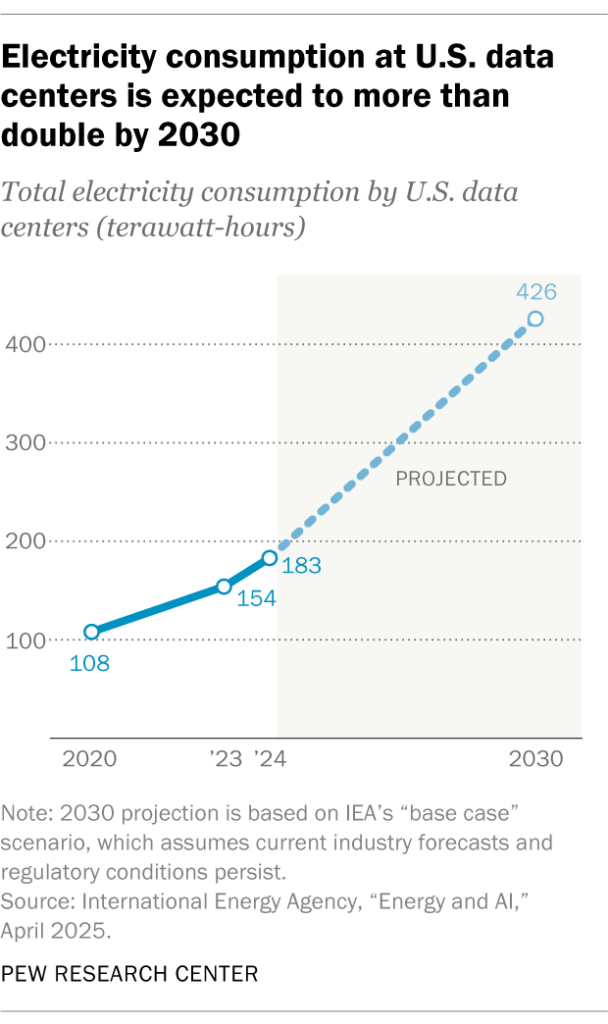
US data centers consumed around 200 TWh in 2024. Of that total, AI-specific servers used 53-76 TWh. In fact, this equals the power consumption of more than 7 million US homes. Furthermore, projections show AI could claim electricity equal to 22% of all US households by 2028.
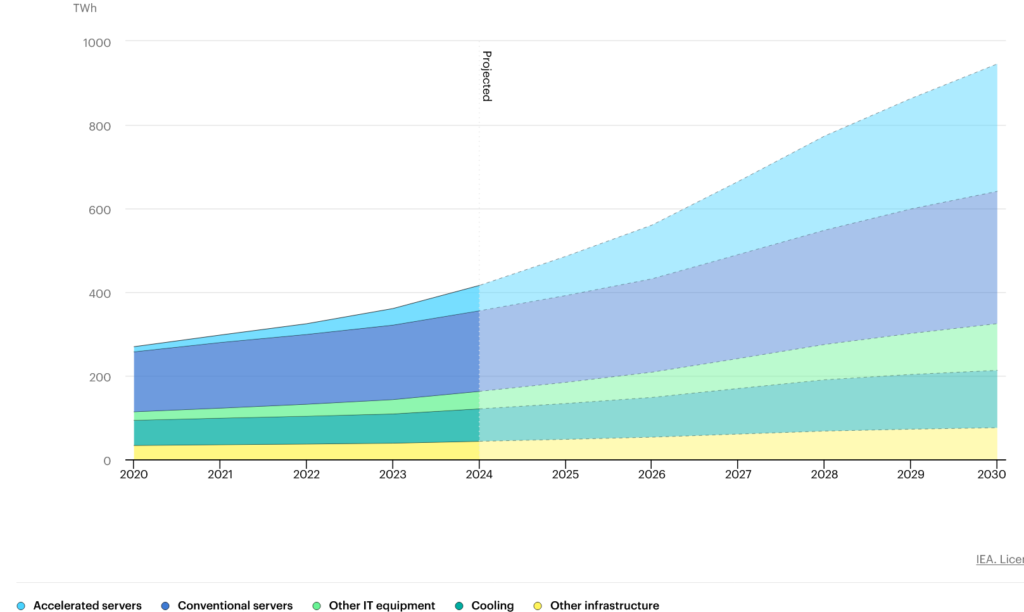
Globally, data center electricity demand reached about 415 TWh in 2024. Consequently, it represented roughly 1.5% of total world electricity consumption. Looking ahead, figures suggest this could double to 945 TWh by 2030. At the same time, AI-accelerated servers are growing at nearly 30% annually.
Carbon emissions follow closely. For example, AI systems alone could emit between 32.6 and 79.7 million tons of CO₂ in 2025. Moreover, many data centers still rely on carbon-intensive power grids. As a result, US data center carbon intensity remains 48% above the national average.
India Faces Its Own Rising Demand
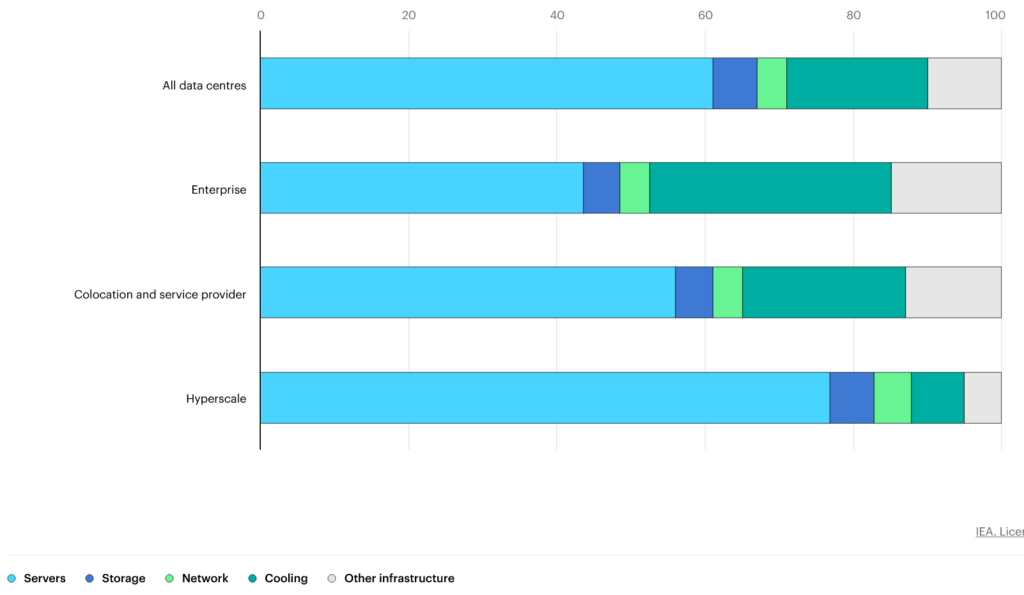
India is also building momentum as a global data center hub. Currently, installed capacity stands near 1.4-1.5 GW. However, it could reach 8-10 GW by 2030. Consequently, electricity use may jump from 10-15 TWh to 40-45 TWh. This would increase data centers’ share of national electricity demand from less than 1% to nearly 3%.
Meanwhile, India’s overall power demand is growing at about 7% annually. Although renewable energy capacity continues to expand, new data center loads could increase dependence on coal in the short term. In addition, water use for cooling places further pressure on already stressed regions.
There are encouraging signs. For instance, Yotta’s NM1 data center in Mumbai sources more than 50% of its electricity from renewable energy and targets 70% in the future. Therefore, such projects point toward greener pathways. Nevertheless, India must scale solar, wind, and energy storage much faster to stay aligned with its net-zero ambitions.

Experts also highlight transparency gaps. Most closed AI providers share limited information about energy use. “The closed AI model providers are serving up a total black box,” noted Boris Gamazaychikov of Salesforce.
Meanwhile, governments and companies are reshaping energy strategies around AI. Big Tech is exploring nuclear restarts and large-scale infrastructure projects. For example, Stargate plans to invest $500 billion in US data centers. Similarly, Google intends to spend $75 billion on AI infrastructure in 2025 alone.
Path Forward Requires Action
Efficiency gains certainly help. However, demand continues to outpace them. As AI expands into search, autonomous agents, and everyday applications, electricity needs will rise further. Therefore, India has an opportunity to lead by linking new data center approvals to renewable power purchase agreements. Additionally, advanced cooling technologies can reduce environmental impacts.
The AI boom is driving innovation. Yet its growing energy footprint demands accountability. Consequently, clean energy deployment must accelerate worldwide. Ultimately, India’s clean future will depend on balancing digital growth with climate reality.
Reference- Technology Review, IEA website, IEEFA, ScienceDirect, Press Information Bureau