



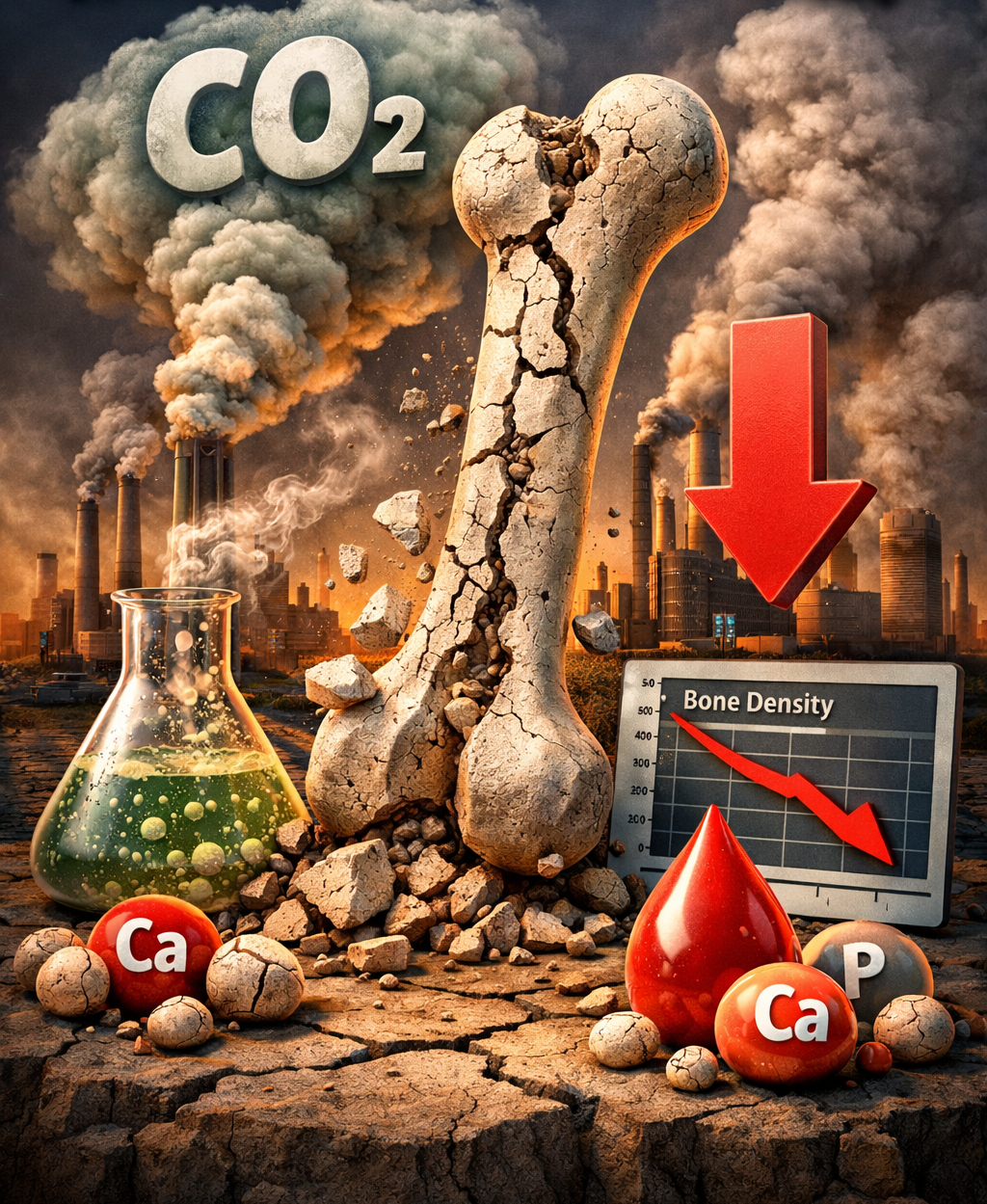
The effects of climate change may extend beyond melting glaciers and rising seas. New research suggests that increasing carbon dioxide in the atmosphere could also affect human bones.
Scientists say the rise in atmospheric CO₂ is altering the chemistry of the human body. The findings raise new questions about long-term public health in a warming world.
A recent study published in the journal Air Quality, Atmosphere & Health analyzed blood samples from U.S. adults collected between 1999 and 2020. Researchers observed that bicarbonate levels in human blood rose by about 7% during the period, mirroring the increase in atmospheric carbon dioxide. At the same time, levels of key bone minerals such as calcium and phosphorus declined, the researchers reported.
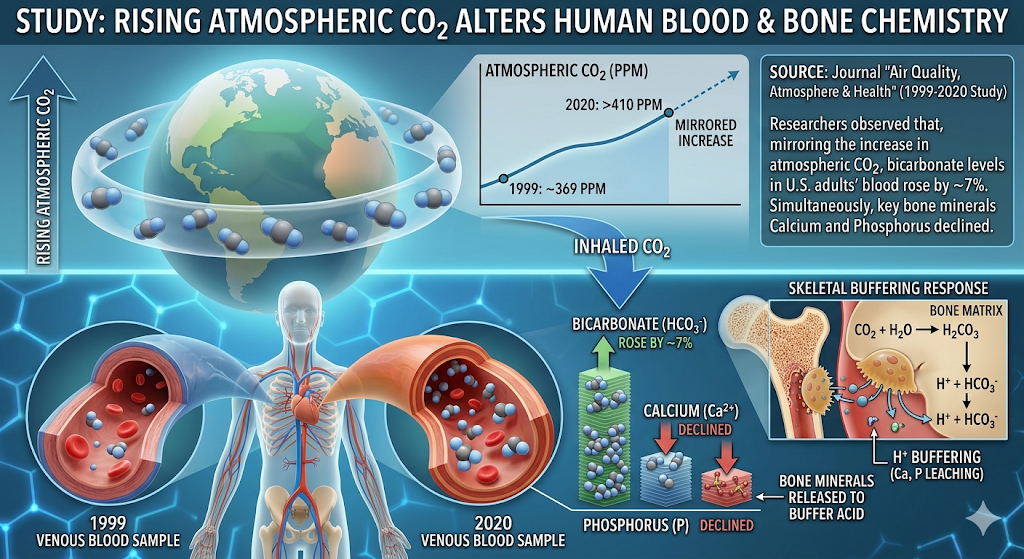
Scientists say the connection may lie in how the body regulates carbon dioxide. When blood contains excess carbon, bones release calcium and phosphorus to help balance the chemistry. Over time, this process can weaken skeletal structures if the minerals are not fully replenished.
Researchers Alexander Larcombe of The Kids Research Institute Australia and Phil Bierwirth of the Australian National University warn that human physiology may already be responding to rising carbon pollution. The authors note that “human physiology has progressively and consistently altered over the last ~25 years.”
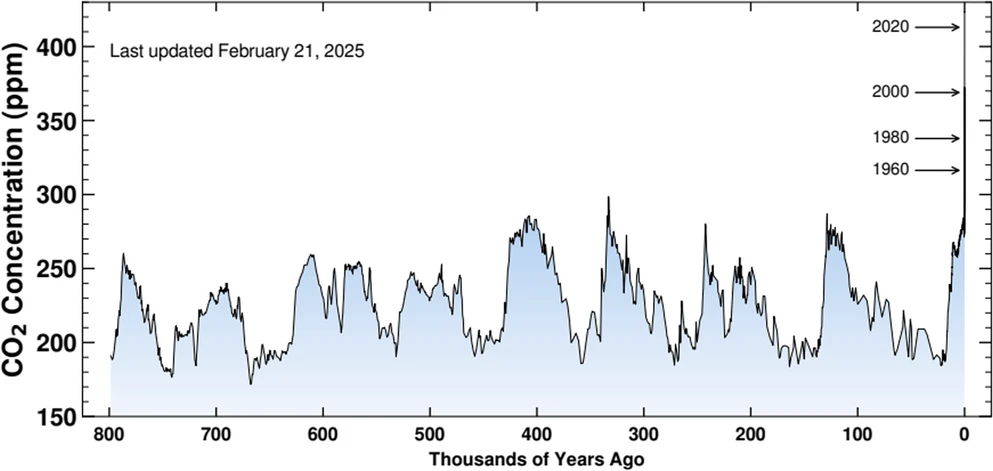
The concern is not theoretical. Global atmospheric carbon dioxide has risen sharply since the industrial era, largely due to fossil-fuel combustion and deforestation. The new study suggests that if current trends continue, bone-related health effects could emerge within the next 50 years.
Human bones are highly dynamic structures. Studies show that natural remodeling processes replace roughly 9–12% of bone tissue each year. However, persistent chemical stress could disrupt this balance.
Scientists have long used bones as indicators of environmental exposure. Research has shown that skeletal tissues can accumulate pollutants and reflect long-term contact with metals and other elements in the environment. The new findings suggest that atmospheric carbon itself may become another measurable environmental influence.
Researchers caution that further studies are required to confirm the long-term health implications. Yet the study highlights a rarely discussed dimension of climate change: its potential biological effects on the human body. For policymakers and scientists, the message is clear. Climate change is not only an environmental issue. It may also be a human health challenge.
Reference- Futurism, ScienceDaily, Journal of Air Quality, Atmosphere & Health, Cambridge University Press