



India’s steel sector is entering a decisive phase in its energy transition. A new report highlights how renewable power is beginning to transform the country’s secondary steel industry.
The sector already plays a major role. It contributes 38–40% of India’s crude steel production, according to the report. Growth has been steady. Secondary steel output rose from 44 million tonnes in FY2020 to 67 million tonnes in FY2025, recording a 6.7% CAGR.
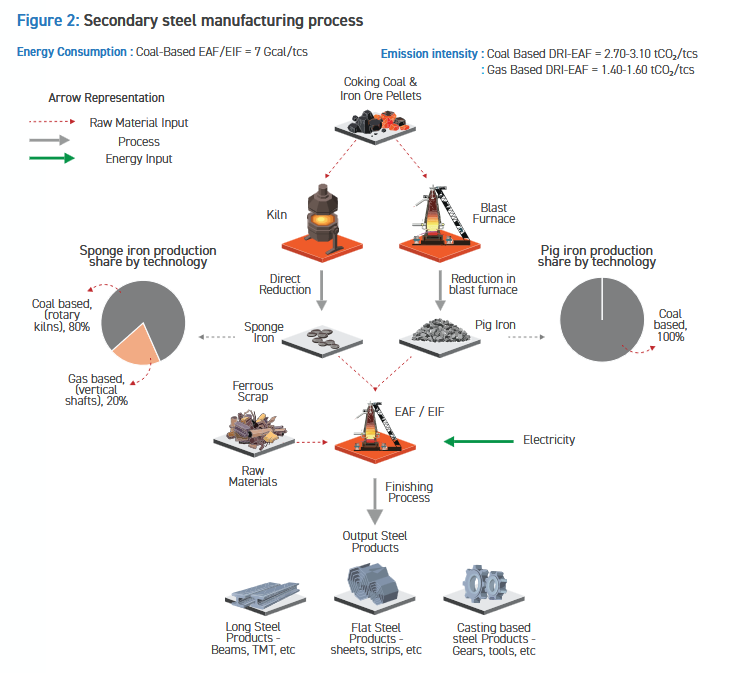
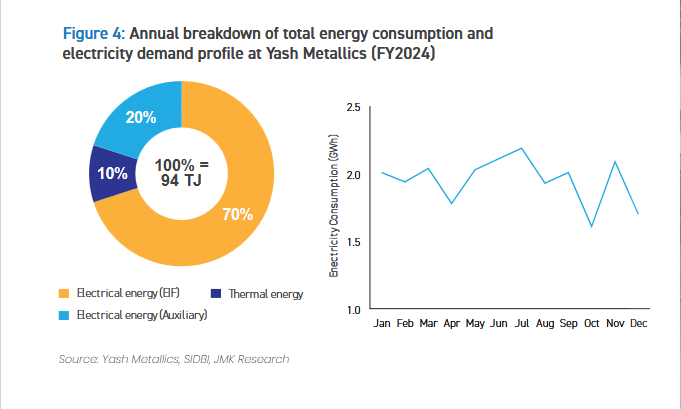
Energy demand remains high. Electricity drives most operations in induction and electric arc furnaces. In fact, electricity accounts for nearly 90% of total energy use in some units. This dependence makes power costs and sources critical.
A case study, for instance, offers insight into the transition. Yash Metallics, based in Maharashtra, has installed 7.5 MWp of solar capacity, generating about 12 GWh of clean energy annually. As a result, the shift has been significant. Currently, around 51% of its electricity comes from renewable sources.
The financial impact is clear. As a result, the company has reduced energy costs by nearly 49%, saving about Rs. 9.9 crore annually. Therefore, these savings matter. Energy expenses typically account for 20–40% of operational costs in steel manufacturing.
However, adoption remains uneven. Many small and medium enterprises still rely on conventional power. Infrastructure gaps persist. Grid access and financing challenges slow the transition.
The environmental case is strong. Steel made from scrap can reduce emissions by up to 58% compared to iron ore-based production. Yet scrap availability remains limited. India meets only 25% of its scrap demand domestically, relying heavily on imports.
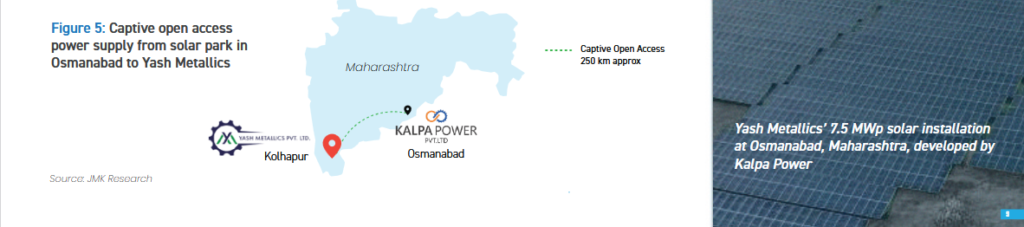
Policy support is expanding. For instance, open access and group captive renewable models are being promoted. As a result, these mechanisms allow industries to procure green power at competitive rates. However, execution varies across states.
Experts stress a broader shift. Renewable integration must scale across steel clusters like Kolhapur and Jalna. Investments are being planned. Progress is being tracked. But momentum must accelerate.
India’s secondary steel sector stands at a crossroads. Clean energy adoption has begun. The economic benefits are visible. The climate gains are measurable. The next phase will depend on scale, policy clarity, and industry commitment.
Reference- JMK Research & Analytics, mint, Mercom India, Yash Metallics website