



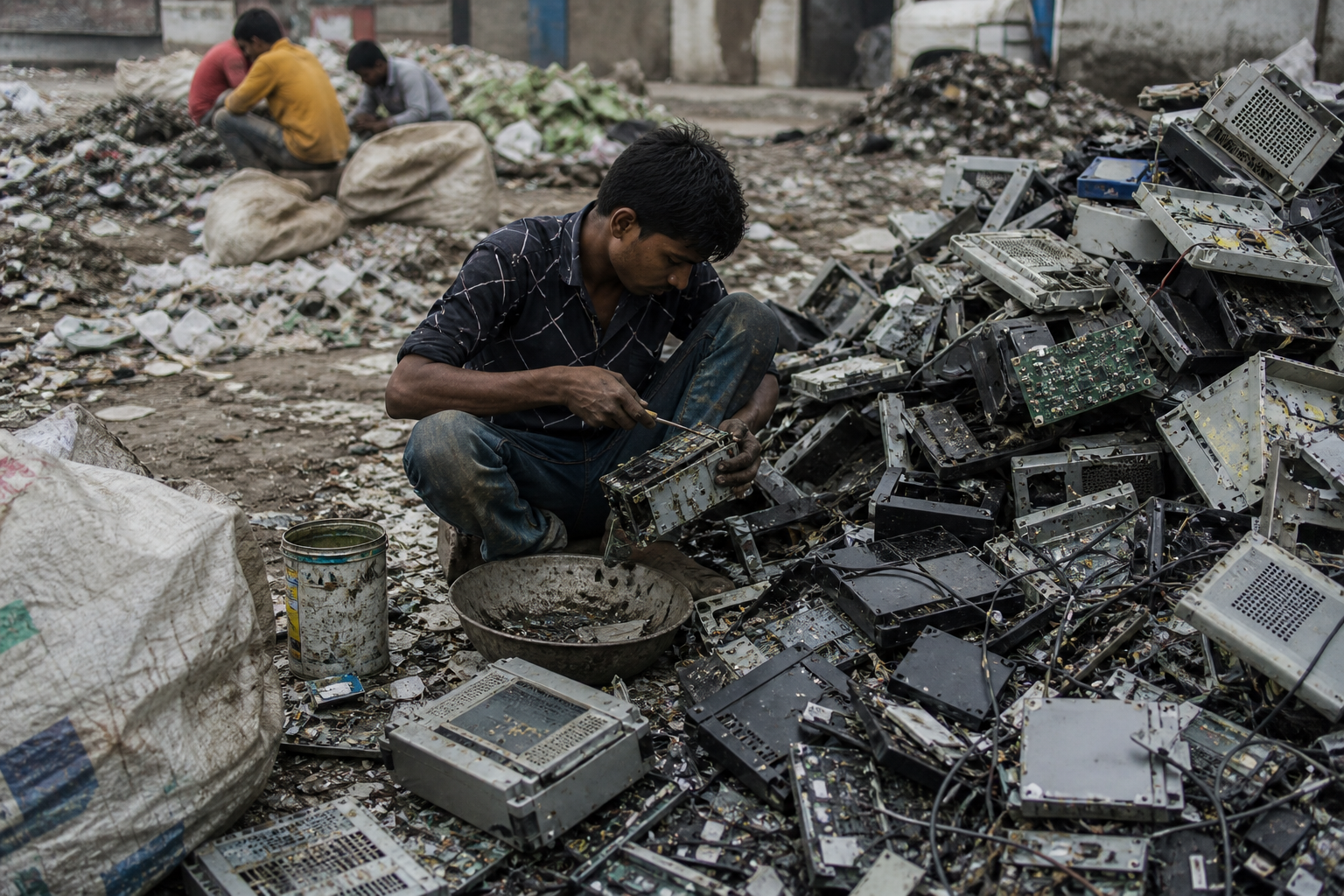
India is sitting on electronic scrap worth over ₹51,000 crore, but most of this value never reaches certified recyclers. Discarded phones, laptops, appliances and circuit boards still flow to the informal sector, where recovery remains inefficient and polluting.
A recent analysis found that nearly 80% of India’s e-waste stays outside the formal processing system. This continues despite tighter compliance rules and expanded producer responsibility mandates.
Valuable metals such as copper, aluminum, gold and rare earths are therefore being extracted inefficiently or lost altogether.
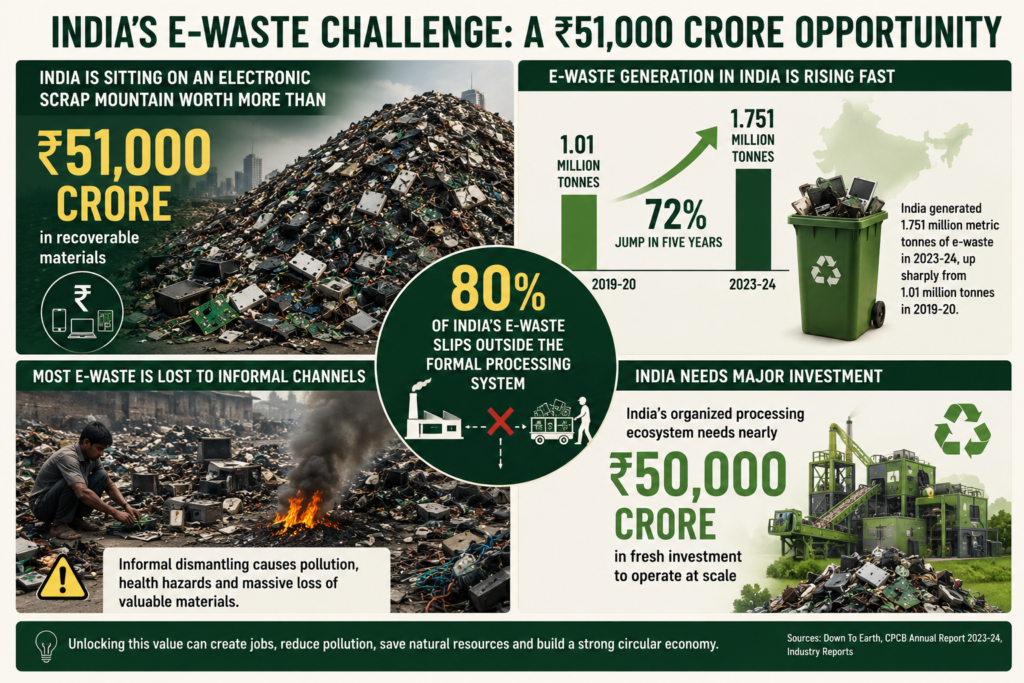
The scale is rising fast. India generated 1.751 million metric tonnes of e-waste in 2023-24, up sharply from 1.01 million tonnes in 2019-20. That marks a jump of more than 72% in five years.
Yet collection systems are failing to keep pace. Industry experts estimate that formal recyclers receive barely a fraction of discarded electronics because kabadi networks still dominate household and commercial disposal.
“The raw material is not reaching organized players,” recycling stakeholders warned at Bharat Recycling Show 2025, noting that India’s processing ecosystem needs nearly ₹50,000 crore in fresh investment to operate at scale.
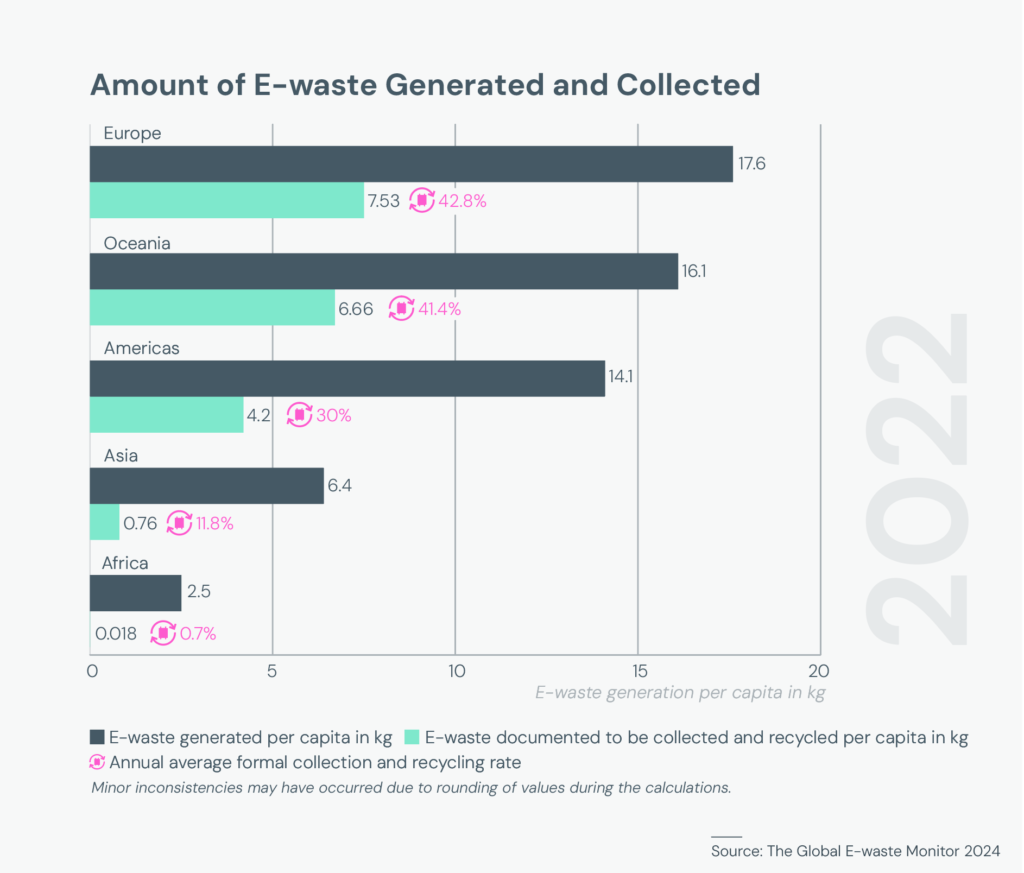
This is not just an Indian problem. The International Telecommunication Union and UNITAR said in the Global E-waste Monitor 2024 that the world generated 62 billion kg of e-waste in 2022. However, formal systems collected and recycled only 22.3% of this volume. The report adds that e-waste is growing five times faster than documented recycling rates.
India mirrors that global leakage, only at a more economically damaging scale. Informal dismantling burns wires, acid-leaches boards and dumps toxic residue. Consequently, recoverable materials are lost while lead, mercury and plastic pollutants enter air, water and soil.
Online sustainability forums have begun calling e-waste the world’s “fastest-growing hidden resource loss,” reflecting growing public frustration over weak collection chains and poor accountability.

The opportunity is clear. If India can redirect discarded electronics into traceable formal recycling, it can unlock a domestic urban mine worth tens of thousands of crores, reduce imports of critical minerals and cut hazardous pollution.
For now, however, the country is throwing away both money and materials.
Reference- Down To Earth, Paryavaran NITI Manthan conference, Material Recycling Association of India, UNITAR