



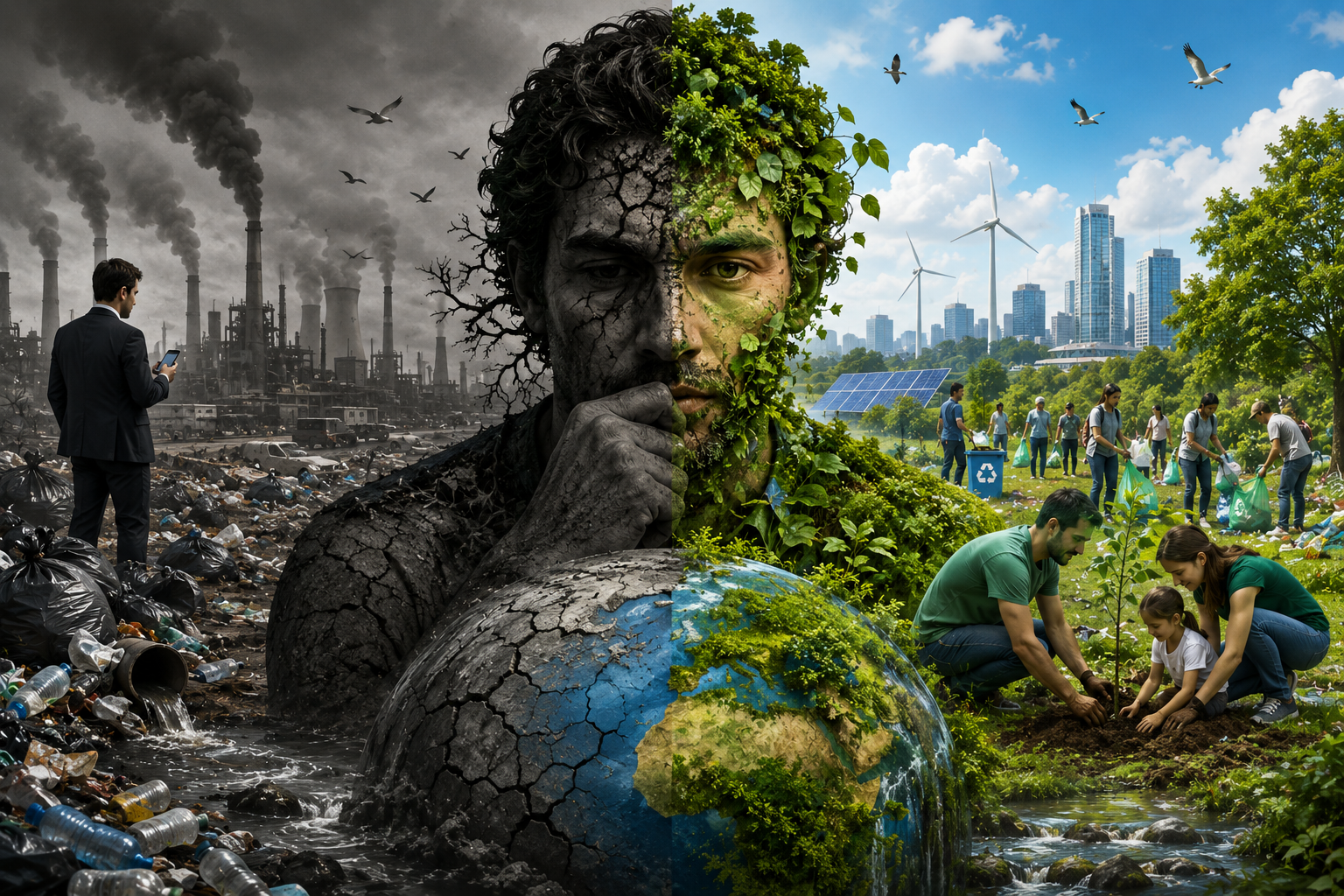
People often blame technology or weak policies for climate change, biodiversity loss, plastic pollution, and deforestation. Yet a deeper issue sits underneath. Human behavior drives these crises.

A recent Aeon essay explains this well. Humans evolved with the ability for both cooperation and competition. “We evolved not to cooperate or compete, but with the capacity for both,” writes Jonathan R. Goodman. People work together when norms and accountability stay visible. When oversight fades, self-interest wins.
Environmental protection needs strong cooperation. For example, communities must protect forests. Likewise, industries must cut emissions. At the same time, citizens must reduce waste. Meanwhile, governments must enforce rules. According to the World Economic Forum, this is a classic social dilemma. In other words, individual gains often clash with collective welfare.

Look at climate action. The United Nations states global greenhouse gas emissions must fall by roughly 43% by 2030 to limit warming to 1.5°C under the Paris Agreement. Many nations still expand fossil fuels while they voice support for goals. This gap shows “moral credentialing.” Good intentions mask later harm.
Science backs the need for cooperation. Research in Nature shows cooperative behavior grows when social structures reward it and punish free-riding. Communities facing shared risks cooperate better with trust and transparency.
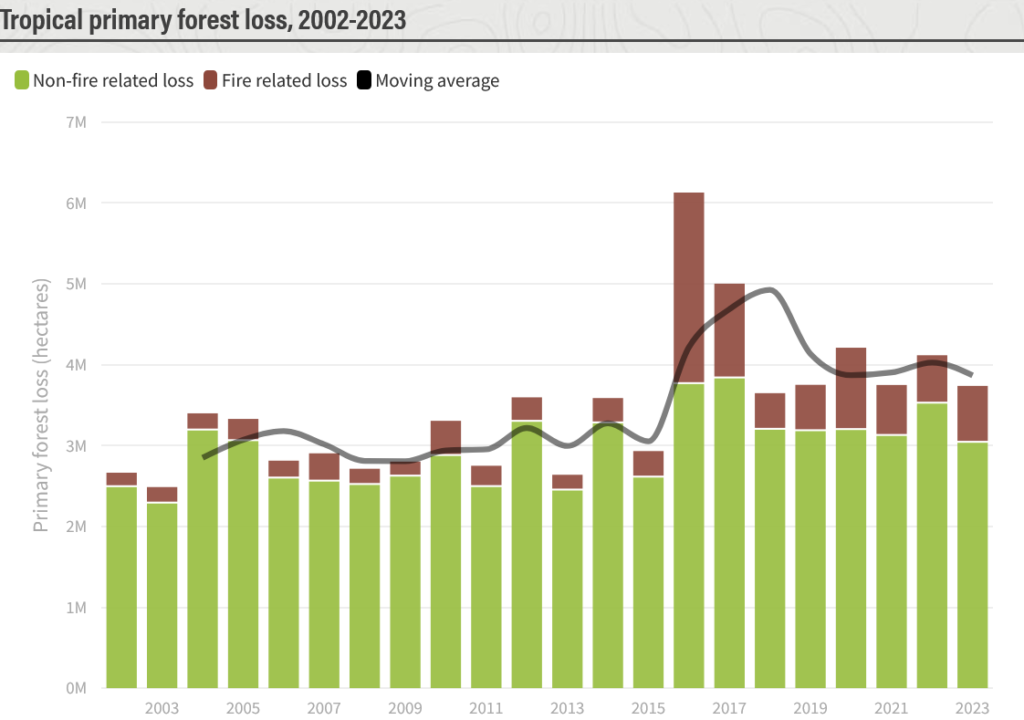
Failed cooperation hurts nature badly. Global data reveals the world lost 3.7 million hectares of tropical primary forest in 2023. Plastic waste chokes oceans. Wildlife numbers drop fast from habitat loss.
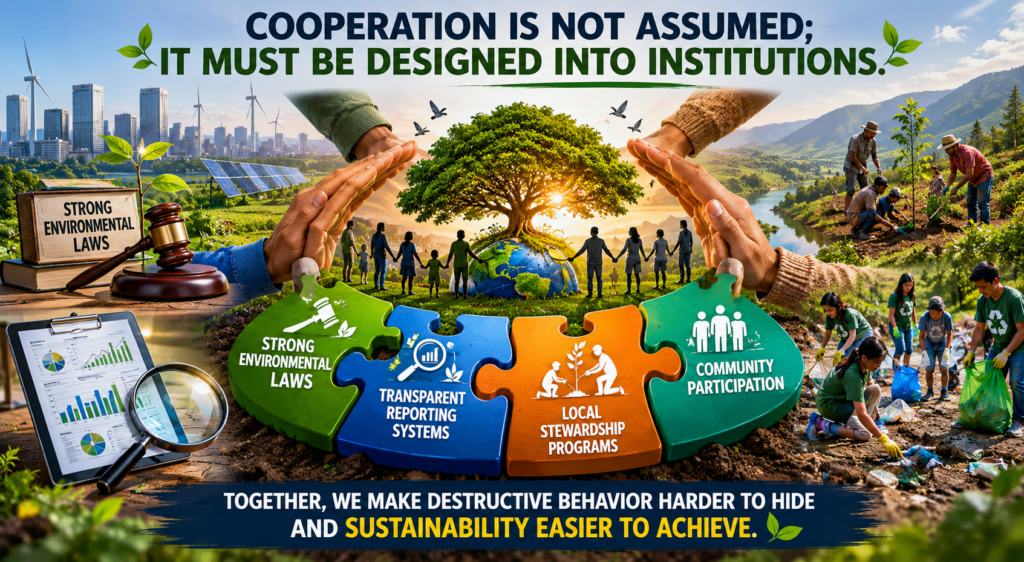
However, the Aeon essay offers a practical lesson. Cooperation should not be assumed; it must be designed into institutions. Strong environmental laws, transparent reporting systems, local stewardship programs, and community participation make destructive behavior harder to hide and sustainability easier to achieve.
At CleanFuture we feel that future of environmental protection may depend less on changing human nature and more on creating systems that reward responsible behavior. Ecology ultimately reflects collective choices. When accountability exists, cooperation flourishes. When it disappears, ecosystems often pay the price.
Reference- Aeon essay, Nature, National Geographic, World Economic Forum, United Nations website