



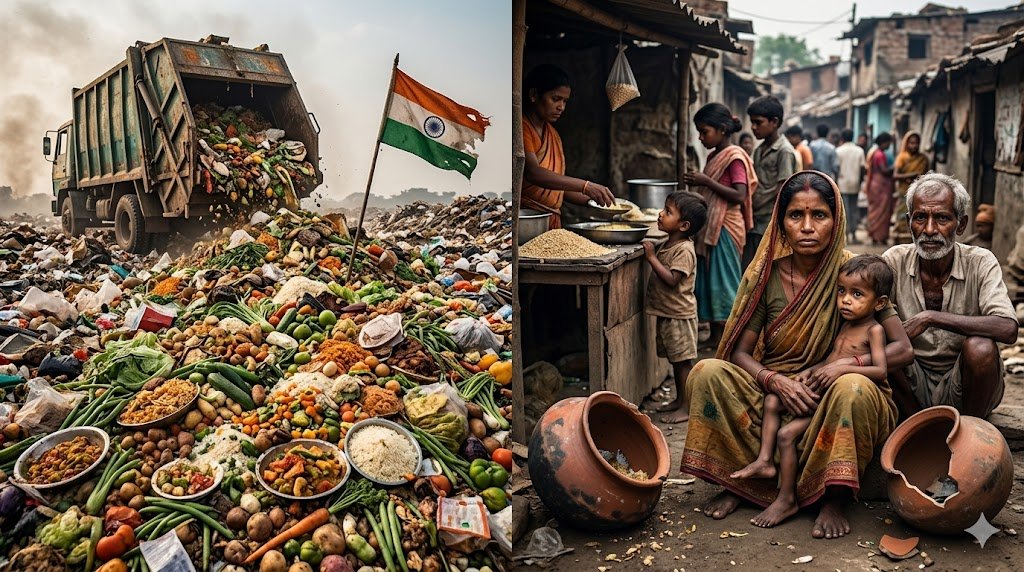
Global food losses shock experts. The FAO’s 2011 report, Global Food Losses and Food Waste, reveals that roughly one-third of food produced for human consumption vanishes. This totals about 1.3 billion tons yearly. Resources get wasted. Greenhouse gases rise uselessly.
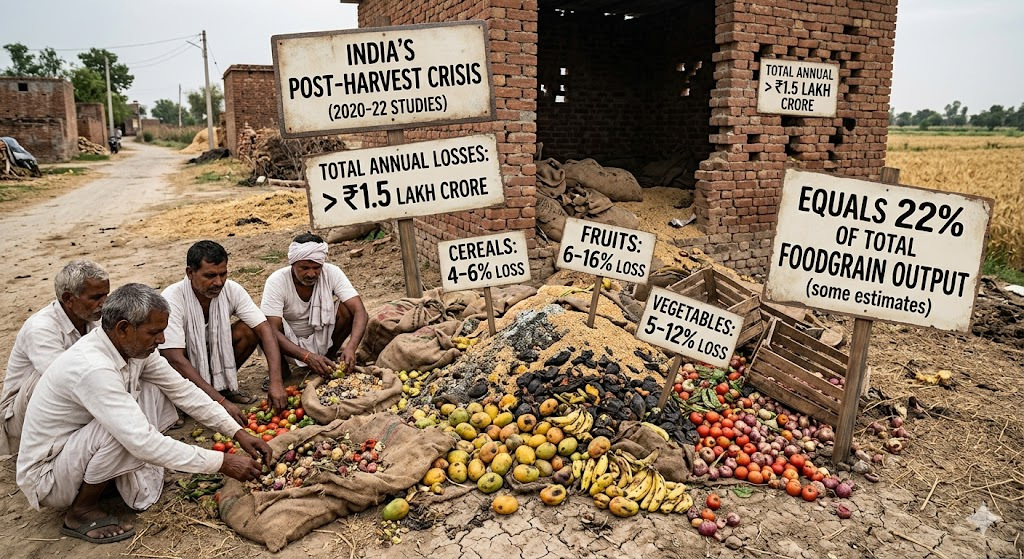
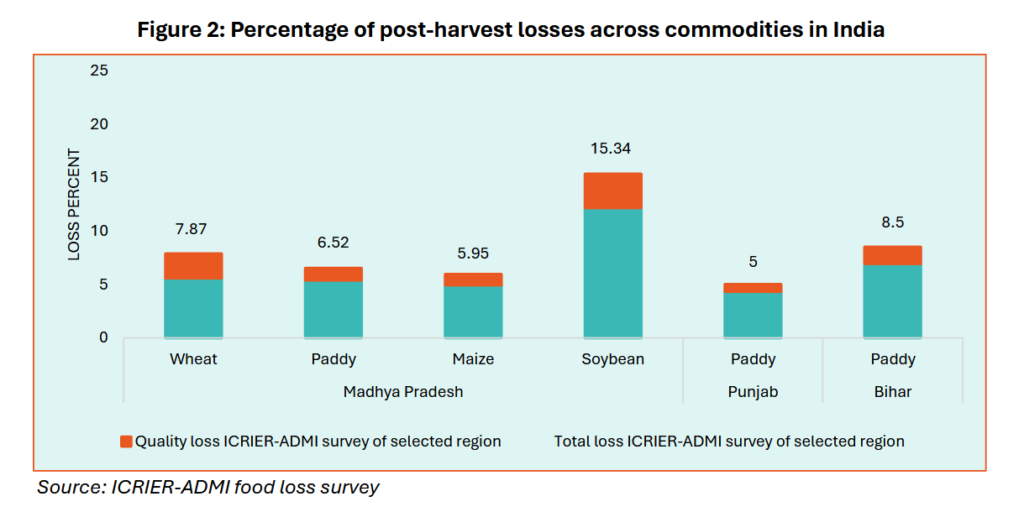
India faces this crisis head-on. Farmers toil hard. Yet post-harvest losses plague crops. Studies from 2020-22 show cereals lose 4-6%. Fruits suffer 6-16%. Vegetables face 5-12%. Total annual losses reach ₹1.5 lakh crore or more. This equals 22% of foodgrain output in some estimates.
UNEP’s Food Waste Index 2024 adds urgency. India discards nearly 74-78 million tonnes yearly. Households drive much of it. Per capita waste hits around 50-55 kg. China leads, but India’s scale hurts deeply with 1.4 billion people. Millions stay hungry. Over 20 crore Indians face food insecurity daily.
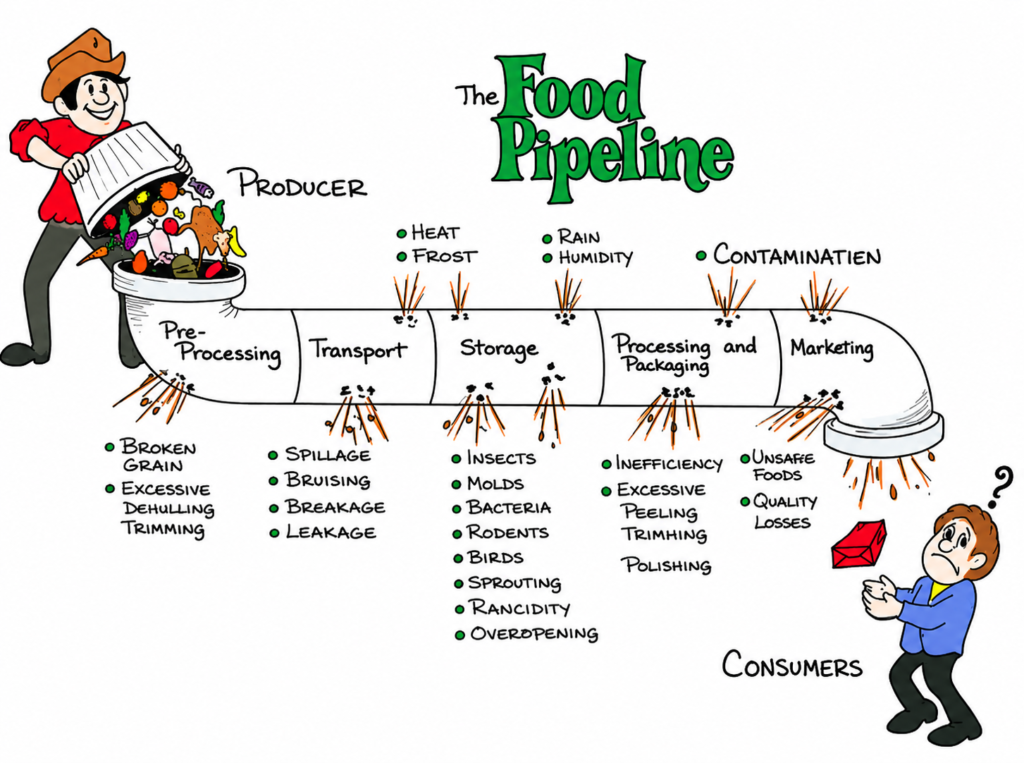
Food loss causes stay clear. First, poor storage hits hard in hot climates. Additionally, the lack of cold chains wastes perishables, especially since infrastructure gaps persist in rural areas. As a result, supply chains break easily. Meanwhile, consumer habits add waste at home. According to the FAO, low-income regions lose food early in the supply chain, but India mixes both patterns.
Climate costs mount. Food loss generates 8-10% of global GHG emissions. Methane rises from waste. Water and land get squandered. India’s farmers already battle erratic monsoons. Reducing losses cuts emissions. It eases pressure on resources.
Experts quote strong warnings. “Reducing post-harvest losses proves more cost-effective than producing more,” states an ICRIER brief. PM Narendra Modi highlighted waste as injustice to the poor in Mann Ki Baat. Action lags despite awareness.
Fortunately, solutions exist, but they require a coordinated effort to implement. For instance, investments in cold storage must rise, while modern packaging can further reduce spoilage. Simultaneously, farmer training spreads best practices, and proactive policy pushes for more robust cold chains. Furthermore, public-private ties can strengthen the entire supply line, just as awareness campaigns target waste in households.
Ultimately, India can lead this transformation, as a clean future depends on it. By ensuring less waste, the nation gains more food security, allowing farms to thrive while the environment gains. However, time runs short. Therefore, leaders and citizens must act now, because efficiency saves both lives and the planet.
Reference- Food and Agriculture Organization (FAO) PDF, UNEP report, NABCONS, Earth Day Network